



 Over 1.000 comments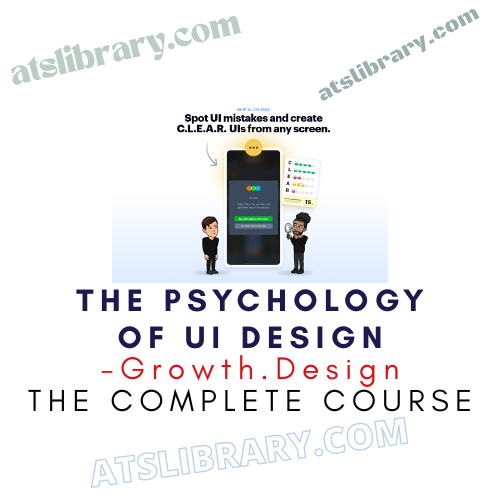


Here’s What You Get:
What is Growth.Design – The psychology of UI design
A UX/UI education system + content platform that teaches:
How to design interfaces based on human psychology, cognitive biases, and behavior
Instead of focusing only on visuals, Growth.Design emphasizes:
how users think
how they decide
how interfaces influence behavior
Core Idea: Psychology-driven UI
At its core, Growth.Design teaches:
UI is not just design
UI = decision-making system
Meaning:
every button, color, layout → influences user behavior
They combine:
UX design
behavioral psychology
growth & conversion principles
The “106 Cognitive Biases” Framework
One of their most famous resources is:
A library of 100+ cognitive biases & mental models
These are grouped into 4 stages of user interaction:
Information filtering (what users notice)
Meaning-making (how they interpret UI)
Decision/action (what they click/do)
Memory (what they remember later)
This system helps designers:
predict user behavior
reduce friction
increase conversions
Key Psychological Principles (Examples)
1. Recognition > Recall
Users prefer recognizing options vs remembering
→ Use icons, autofill, suggestions
2. Social Proof
People follow what others do
→ Reviews, testimonials, user counts
3. Scarcity & Urgency
Limited time/stock increases action
→ Countdown timers, “only 3 left”
4. Framing Effect
How info is presented changes decisions
→ “Save $100” vs “Spend $400”
5. Serial Position Effect
Users remember:
first items
last items
→ Place key info at top & bottom
UI-Specific Course: “Clear UI”
Their UI-focused training teaches how to apply psychology directly to screens:
Core lessons:
Copywriting → words drive decisions
Layout → structure attention
Emphasis → guide user focus
Accessibility → reduce cognitive load
Reward systems → reinforce behavior
Frameworks they teach
C.L.E.A.R. Framework (UI)
Used to evaluate screens:
clarity
hierarchy
usability
Goal: eliminate confusing UI
B.I.A.S. Framework (UX/Product)
Used to:
identify friction points
apply correct psychological principle
Goal: improve user journeys
Teaching style (what makes them unique)
Comic-style case studies
Break down apps like:
Slack
Uber
Duolingo
Explain why designs work psychologically
Practical, not theoretical
Real UI examples
Before/after redesigns
Step-by-step improvements
Who it’s for
Best for:
UX/UI designers
Product managers
Growth marketers
SaaS founders
Strengths
Extremely practical
You can apply immediately to real products
Unique angle
Focus on psychology + conversion, not just visuals
High-quality case studies
Some of the best in UX education
Weaknesses / Criticism
Expensive
High barrier for beginners
Can oversimplify reality
Real UX often depends on:
business constraints
data
A/B testing
“Best practices” ≠ always correct
Even designers debate their redesigns (common criticism in UX community discussions)
Final Verdict
Excellent for:
conversion-focused design
product thinking
Overkill for:
pure visual/UI beginners
Not necessary if:
you only want basic design skills








Reviews
There are no reviews yet.