



 Over 1.000 comments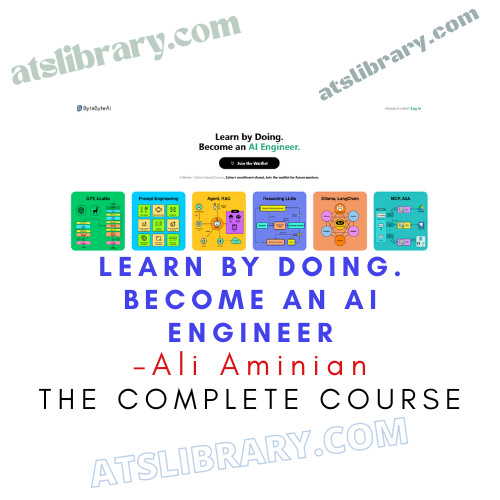


WHAT WILL YOU GET!
What the course is
It’s a cohort‑based live course offered via ByteByteGo, in collaboration with author Ali Aminian.
The course emphasizes learn‑by‑doing: you build real‑world AI applications rather than just passively watching videos.
It has a structured curriculum, designed to take people step by step from fundamentals to more advanced AI engineering topics.
Includes live feedback and mentorship from instructors / peers.
Strong community component: cohort learning, peer interaction.
What is appealing / advantages
Here are the strong points I see:
Hands‑on approach
Builds actual projects, gives you experience with applying what you learn. That tends to help a lot with learning retention and being able to do work after the course.Structure + guided path
For many people, having a clear roadmap (fundamentals → advanced) helps avoid overwhelm and keeps progress steady.Mentorship and feedback
Getting live feedback / mentorship is often what separates a useful course from one where you learn a lot of theory but struggle to apply it.Peer/community component
Learning in a cohort with peers can be motivating; you can get help, see others’ work, collaborate, etc.Up to date / designed for current practices
ByteByteGo tends to aim for modern tools and methods, so likely you’ll get exposure to current practices in AI engineering. (Though the syllabus details beyond “fundamentals → advanced” aren’t fully public, based on what I saw so far.)
What to check carefully / possible downsides
No course is perfect; here are things to verify or be aware of:
Prerequisites / background required
How much coding / math background is expected? If you’re starting from scratch, how well will you be supported?
Sometimes “learn‑by‑doing” courses assume you already know certain basics; if not, you may struggle or have to spend extra time catching up.
Depth vs breadth
Given it’s a cohort and live, there may be trade‑offs. Will the course go deep enough in all topics, or is it more shallow across many topics?
The course promises going “from fundamentals to advanced,” but “advanced” means different things to different people.
Timeline / pacing
How fast is the cohort moving? Will there be enough time to digest, practice, debug, etc.?
Do you get starter code / notebooks, or is more of the work expected to be from scratch? (Some in the comments asked about that.)
Support beyond the live sessions
Office hours? One‑on‑one help? Peer review? How responsive is the mentorship?
How much access to instructors is included, and what is the ratio of students to instructors / mentors?
What deliverables / portfolio work
Do you finish the course with things you can show: apps, systems, code repos, possibly deployed models?
Employers care about tangible projects you can demonstrate. If the course doesn’t deliver that, you’ll have to do extra work.
Cost vs value
What is the tuition / investment? Is the cost justified given what you will get (projects, mentorship, tools)?
Consider also your time: live sessions require scheduling, and there’s self‑paced work, debugging, etc.
Updates / relevance
AI tools and frameworks evolve quickly. Is the course content likely to stay relevant?
Do they incorporate recent developments (e.g. generative models, LLM pipelines, deployment, safety, ethics, etc.)?





Reviews
There are no reviews yet.