



 Over 1.000 comments


The Curriculum
Main Topics
🚀 Kalman Filter: The #1 robotics interview question.
🚀 Inertial Sensors: The most popular yet notorious sensors for beginners in robotics.
🚀 Rotation Matrix: The alphabet of robotics engineering.
🚀 State-Space Method: A foundational building block of modern control engineering.
Prerequisites
🚀 Python basics (if, for, array, function, class)
🚀 Calculus (derivative, integral)
🚀 Linear algebra (matrix & vector multiplication)
🚀 Differential equations – d e(x) /dx = ?
🚀 Statistics (mean and variance)
Onboarding
- Intro
- Backgrounds
- Which Code Environment?
- What is Conda? (Optional)
- What is Docker? (Optional)
- Easy Setup Windows Conda
- Easy Setup Mac Conda
- Standard Setup Ubuntu 22
- Standard Setup – Windows WSL
- Course Guide (Download The Code Here)
Review: Python & Math
- 1) Python Basics 1
- 2) Trig. Functions
- 3) Calculus
- 4) Taylor Series & Fourier Series
- 5) Linear Algebra
- 6) Differential Equation
- 7) Statistics (Mean and Variance)
- 8) Statistics (Gaussian Distribution)
- 10) Closure
- 9) Eigen Values and Vectors
Level 0: Giving You Items and Weapons for Level 1
- 22) Noise Filtering: Low-pass Filter
- 13) Rotation Matrix 3
- 10) States
- 1) Level Introduction
- 2) Virtual Robot Scripts
- 3) Realtime Graphing
- 4) Data Collection
- 5) Terminals in Virtual Robots
- 6) PID Control 1
- 7) PID Control 2
- 8) PID Control 3
- 9) PID Control 4: Cascade PI
- 11) Rotation Matrix 1
- 12) Rotation Matrix 2
- 19) Inertial Sensors: Gyroscope 3
- 20) Noise Filtering
- 21) Noise Filtering: Average Window
- 14) Inertial Sensors
- 15) Inertial Sensors: Accelerometer
- 16) Inertial Sensors: Magnetometer
- 17) Inertial Sensors: Gyroscope 1
- 18) Inertial Sensors: Gyroscope 2
Level 1: Quadcopter Height Control
- 2) Height (Altitude) Control 1
- 5) Attitude Control
- 6) Velocity Control 1
- 7) Velocity Control 2
- 3) Height (Altitude) Control 2
- 4) Rate Control
- 8) Capstone
- 1) Introduction
Level 2: First Sensor Fusion: IMU Theory – Direction Cosine Matrix
- 1) DCM Introduction
- 3) DCM Preview 2
- 4) DCM Theory
- 5) DCM Code
- 6) DCM Multirotor
- 2) DCM Preview 1
Level 3: State Space Method
- 5) Mass Spring Damper
- 4) State Space Multirotor 2
- 3) State Space Multirotor 1
- 1) State Space Introduction
- 2) State Space Control
- 6) Nonlinear System
Level 4: Kalman Filter
- 4) Extended Kalman Filter
- 1) Kalman Filter Introduction
- 2) Kalman Filter Code
- 3) Kalman Filter Theory
Outro
- 2) Course Code Answer Pack
- 1) Exit
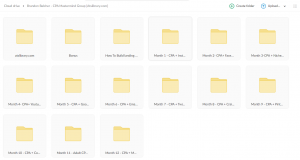
Here’s What You Get:
Elliot – Robotics 101 (from Ubicoders) is an entry-level but serious robotics engineering course designed to help beginners transition into real-world, professional robotics development.
Core Concept
Unlike typical beginner robotics courses, this program focuses on: “Connecting the dots between math, code, and physical behavior.”
It teaches robotics as a complete system, not just coding or hardware separately.
What the Course Teaches
1. Foundations of Robotics Systems
- Understanding how robots actually work as integrated systems
- Core components:
- Sensors
- Control systems
- Software + hardware interaction
Emphasis on system thinking, not isolated skills
2. The 3 Core Pillars
The course is built around:
- Math → models, logic, control
- Code → implementing behavior
- Physical behavior → how robots move & interact
This triad is the foundation of real robotics engineering
3. Industry-Relevant Topics (Intro Level)
You’ll get exposure to areas like:
- Autonomous navigation basics
- Computer vision & perception
- Embedded systems (robot “nervous system”)
- Robot Operating System (ROS) concepts
These are considered core domains in modern robotics
4. Hands-On + Practical Learning
- Focus on applied learning, not just theory
- Designed to avoid:
- Overly academic lectures
- “copy-follow” hobby projects
Goal: build real engineering intuition, not just tutorials
Course Structure
- Acts as the “foundation course” for advanced tracks like:
- Autonomous Navigation
- Perception & AI
- Robot Nervous Systems
- Part of a broader roadmap covering:
- Computer vision
- SLAM (mapping)
- Reinforcement learning
- ROS2 and robotics infrastructure
Who It’s For
Best suited for:
- Beginners who want serious robotics skills (not kids-level)
- Developers transitioning into robotics
- Engineering students aiming for:
- Autonomous vehicles
- AI robotics
- robotics R&D careers
Not ideal for:
- Casual hobbyists looking for simple DIY robots
- People avoiding math/technical depth
Reality Check
- Robotics is multi-disciplinary and complex
- This course tries to simplify entry, but still requires:
- Basic programming (Python/C++)
- Willingness to learn math & systems
It’s more “beginner-friendly professional track” than “easy beginner course.”
Key Value Proposition
What makes it different:
- Focus on how everything connects (big-picture thinking)
- Bridges gap between:
- YouTube tutorials
- Academic research
- → Practical engineering mindset
Bottom Line
Robotics 101 by Elliot is a foundation program for aspiring robotics engineers:
- Not just coding robots → understanding entire systems
- Strong emphasis on real-world applicability
- Designed as the starting point for advanced robotics careers



Reviews
There are no reviews yet.