



 Over 1.000 comments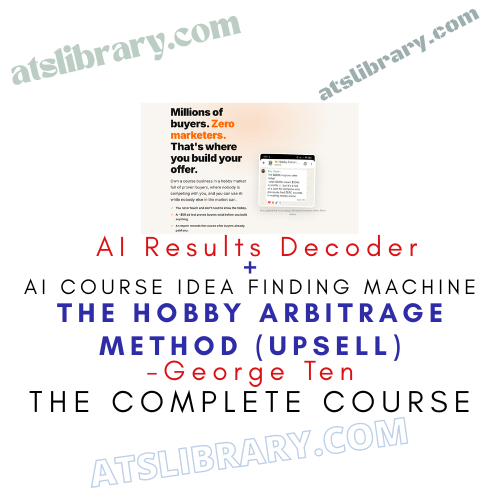


You will get the complete course:
- George Ten – The Hobby Arbitrage Method (Upsell)
- AI Course Idea Finding Machine
- George Brain – AI Results Decoder
Here’s What You Get:
George Ten – The Hobby Arbitrage Method (Upsell) by George Ten is a short training program on building digital course businesses around underserved hobby markets. The core strategy is to identify hobby audiences that already spend money on education, validate a course idea with a small advertising test, and only create the full product after buyers have demonstrated demand.
Overview
Instead of competing in crowded markets such as marketing, fitness, or finance, George teaches you to look at niches such as watercolor, embroidery, crochet, knitting, macramé, and other enthusiast markets where passionate buyers already purchase courses, patterns, workshops, and kits.
The interesting part is that you don’t have to be the expert. The model is essentially:
Find the market → create the offer → test demand → get buyers → hire an expert → produce the course → scale.
What’s Inside
Module 1 – Finding Hobby Markets With Buyer Signals
Learn how to identify hobbies with genuine purchasing behavior rather than simply choosing a hobby with a large audience. The focus is on finding markets where people are already spending money to learn.
Module 2 – The Big Idea Positioning Framework
Develop a course concept that gives people a reason to pay rather than simply consuming free YouTube content. This covers positioning the product around a specific desired outcome or problem.
Module 3 – Conversion Architecture Sales Page Framework
Shows how to structure the sales page and the major sections needed to turn the validated idea into an offer.
Module 4 – The Low-Risk Validation Launch
The main testing mechanism is a relatively small ~$50 Meta ad test. Instead of spending weeks producing a course first, you use advertising and actual buyer behavior to determine whether the idea has potential.
Module 5 – The Validation Decision Framework
Learn how to interpret the test results and decide whether to continue, adjust, or kill the offer rather than relying on intuition.
The Expert Model
After demand has been validated, the method recommends finding someone who is genuinely skilled at the hobby and paying them to record the course. George’s sales page gives $200–$300 as the typical one-time production cost, although actual costs can vary.
This creates a business model where you act more like the marketer/product owner than the instructor.
AI Angle
A major selling point is using AI on the business side—research, copy, sales pages, advertising and validation—while keeping the actual hobby instruction authentic and human. This is particularly relevant to hobbies where customers may be skeptical of AI-generated instructional content.
Bottom Line
The Hobby Arbitrage Method is essentially a “sell first, build second” framework for creating niche digital courses. Its strongest idea is removing the biggest risk of course creation: spending months making a product before knowing whether anyone will buy it.
The overall workflow is:
Hobby market research → buyer-signal analysis → course idea → sales page → ~$50 validation → buyers → hire expert → build course → scale.





Reviews
There are no reviews yet.