



 Over 1.000 comments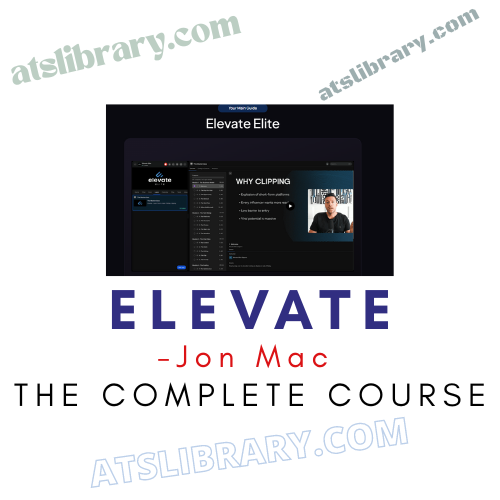


Here’s What You Get:
Who is Jon Mac?
Jon Mac began his entrepreneurial career in around 2010, launching an online apparel business which reportedly generated over a million dollars profit in its first year.
He is the founder and CEO of Elevate Academy (or at least a brand using “Elevate”) which offers training in digital business, content monetization and online entrepreneurship.
His work involves training people in “clipping” or repurposing content, viral video, short-form content monetisation, etc. For example, his course “Elevate” is described as helping people build a “clipping business” without needing to show their face or build a large following.
He has had notable success claims: training “over 10,000 individuals” and collectively helping generate over “$500 million” in sales (though these are claims you should verify independently).
There is also commentary and criticism: an article titled “The Controversial Entrepreneur: Examining Jon Mac’s eCommerce Legacy” raises questions about his business practices, sustainability of his models, and whether the promised results are realistic for many.
What is the “Elevate” program?
The “Elevate” course (or training programme) by Jon Mac is described as a system for content clipping and monetisation via short-form videos (TikTok, Instagram Reels, YouTube Shorts) rather than relying on original content creation, large personal audiences, or product funnels.
Key features / what the marketing says:
A-Z training on identifying long-form content, extracting “clip-worthy” moments, repurposing them for viral short-form formats.
Templates/assets (editing templates, swipe files) to accelerate production and reduce the “reinventing the wheel” work.
Monetisation pathways: The idea is to generate income via view-based payouts (or via platforms/creator funds) rather than building your own product.
Coaching/community support: Live sessions, private community, feedback on clips, strategy calls.
A promise of scalability: Once a clipping process is working, you can replicate it across multiple niches, stack content, scale your output.
Who is it for, and when does it make sense?
Ideal candidates:
Someone who wants to generate income from short-form content but feels hesitant about being on camera or building a large following from scratch.
A side-hustler or digital entrepreneur open to trying newer content/monetisation models (i.e., clipping existing content) rather than traditional product launches.
Someone comfortable with video editing (or willing to use templates), posting regularly, and analysing what works (hooks, retention, platform algorithms).
Someone willing to execute rather than just passively consume training; because these systems work only with action.
Less ideal / caution if:
You’re looking for a “get rich quick” course with minimal effort. The models promise high upside, but they still demand consistent work.
You want to build a personal brand, be on camera, share original content, and that’s your focus—this course emphasises repurposing rather than creation.
You’re not comfortable with short-form content, algorithms, editing, posting frequency, etc.
You expect guaranteed success without risk; as with most entrepreneurial programmes, outcomes vary widely.
What you’ll learn – Module Highlights
While full syllabus details are proprietary, publicly described components include:
Clip: How to source long-form content or identify creators whose content you can repurpose; how to pick “viral moments”.
Post: How to format clips for TikTok/Reels/Shorts, use hooks, captions, timing, hashtags, platform algorithm triggers, even without a big existing audience.
Earn: Monetisation strategies via views, platform rewards, creator-funds or view-based systems, rather than building your own product funnel.
Scale: Once you get a system working, how to replicate across niches, stack content, optimise your workflow, and increase output.
Bonus assets: Editing templates (CapCut etc), swipe-files, community/coaching access.
Strengths & Potential Benefits
The idea of monetising short-form content via clipping rather than full original production lowers the barrier to entry (especially for those who dislike being on camera).
Templates and systems may reduce “blank page” syndrome and speed up execution.
Coaching/feedback/community can help with accountability and course correction — useful when launching such a system.
The approach is relatively modern (leveraging TikTok/Shorts etc) and addresses the shift in content consumption.
Things to Check / Questions to Ask
Proof & Results: Look for real, verifiable case-studies of students who achieved consistent income via this program. Beware of cherry-picked results.
Cost vs ROI: Evaluate how much you invest (course fee, time investment, maybe editing tools) and what the realistic timeline is to recoup that cost.
Support & Access: How much one-on-one coaching is included? How active/valuable is the community?
Work-load & Reality: Even a systemised model demands consistency (posting regularly, tweaking clips, monitoring performance). Are you ready for it?
Sustainability: Viral content models can be volatile due to algorithm changes. How much of the training deals with adaptability and long-term stability?
Transparency: What are the terms of the “guarantee” (if offered)? Are there conditions you must meet? What happens if you don’t hit goals?
Fit with your goals: If you’re more into building a brand, long-form content, or product creation rather than clipping, perhaps a different course is a better match.








Reviews
There are no reviews yet.