



 Over 1.000 comments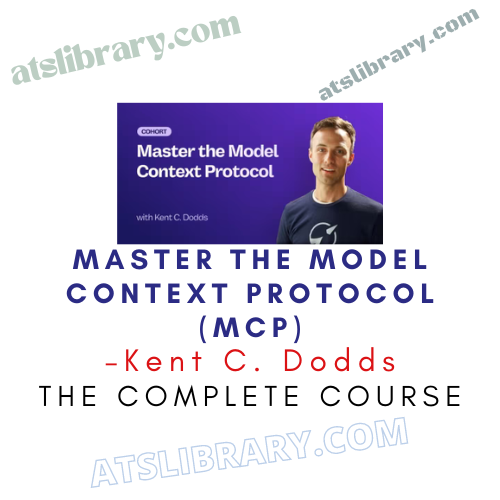
WHAT WILL YOU GET!
What is the Model Context Protocol (MCP)?
MCP (Model Context Protocol) is a protocol/standard designed to let AI agents (LLMs) interact with external tools, data sources, and services in a structured, context-aware way.
It defines types of system components like resources, tools, prompts, and transports to standardize how external functionality is exposed to models.
The idea is for an AI “client” (e.g. a model or agent) to request context or trigger tools via MCP, decoupling the internal logic of the model from the external systems.
Organisations and frameworks are adopting MCP (or talking about adopting) because it can unify many ad hoc integrations (e.g. “LLM calls API X, Y, Z” becomes “LLM connects to MCP server that exposes APIs/tools/resources”)
For example, Kent’s own site provides an “MCP server” that lets AI agents search Kent’s blog content, subscribe to his newsletter, etc.
So MCP aims to be something like a universal “plug” that allows AI models to access external functionality in a reliable and secure fashion.
What does the Master the MCP course cover?
From available public descriptions:
The course is delivered as a cohort workshop (2 weeks) with multiple modules.
The modules / workshop topics include:
MCP Fundamentals — core architecture, building blocks, tool & resource basics
Advanced MCP Features — more sophisticated tool / data / prompt interactions, “long-running tasks,” etc.
MCP UI — building interface layers so that the AI + context can present or interact via UI (beyond plain text)
MCP Authorization / Auth — secure, authenticated interactions (e.g. user-specific access) using OAuth2.1 and other patterns
The course is relatively lean: around 1–2 hours per day during the cohort, with live office hours, Discord community, and practical exercises.
After the cohort, participants retain lifetime access to materials.
Kent emphasizes building incrementally, applying software engineering principles (e.g. “make it work, then refactor, then optimize”) in the context of MCP.
Strengths & what makes it compelling
Cutting‑edge domain
MCP is relatively new and is becoming highly relevant in AI integration ecosystems. Being early gives you leverage.Structured, guided learning
The cohort format enforces pacing, gives accountability, and gives you direct access to Kent (or his team).Practical hands‑on work
You’ll build real MCP servers, wire them up, explore UI and auth, not just theoretical slides.Integration with existing skills
If you already know web development, APIs, React or backend stacks, you can reuse that knowledge in building MCP servers/clients.Focus on robust architecture & security
Given the stakes of exposing external tools to AI agents, handling security, authorization, tool boundaries, etc., is critical. The course tackles those topics as core modules.
Challenges / What to watch out for
Technical prerequisites
You’ll need reasonable backend skill (APIs, HTTP, JSON, possibly Node/TypeScript or Python) to really benefit.Rapidly evolving standard
Because MCP is new, parts of the spec, tooling, or best practices may change over time. Course content may need updates.Limited real-world cases yet
Because adoption is still in early stages, there may be fewer mature, large-scale examples to learn from.Cohort scheduling & time zone friction
Live components might not align well with your time zone, depending on when the workshops / office hours are scheduled.Cost / access
As a cohort-based offering, it may have higher price or limited seats than self‑paced courses.
How to assess / decide whether to take it
Here’s a quick checklist:
| Criteria | Yes / No / Unsure | Notes |
|---|---|---|
| You already have backend / API experience | You’ll avoid being stuck on fundamentals | |
| You want to build AI agents or integrate LLMs with external systems | This aligns directly with MCP’s purpose | |
| You prefer guided, paced learning vs DIY | Cohort format helps | |
| You’re comfortable with evolving tech & ambiguity | MCP is new and evolving | |
| You can commit 1–2 hours/day for a two‑week period | That’s what they ask | |
| You care about security, architecture, maintainability | These are essential in MCP usage |
If most of those lean “Yes / Favorable,” then Master the MCP is likely a strong investment for you.
How you can use MCP (and this course) realistically
Build AI agents for your own tools/services where the model can call functions or fetch data dynamically, instead of just static prompt + return.
Expose parts of your database, file storage, analytics layer, or internal APIs to the AI via MCP servers.
Create UIs that combine model output + interactive elements (buttons, resource lists, forms) via MCP UI.
Manage user‑level access (i.e. only let the AI do certain things depending on who the user is) via the Auth module.
Use MCP in conjunction with your existing LLM / ChatGPT / Claude workflows so that agents can “live inside” your application environment.





Reviews
There are no reviews yet.